

The Occupational Safety and Health Administration, or OSHA, is the federal agency responsible for workplace safety. Since 1970, it’s been responsible for making sure workers in the U.S. are trained,equipped, and protected from known hazards on the job.
Skipping that training might save time in the short run, but it can cost lives later. It can also cost your company thousands in fines.
“One serious OSHA violation can cost over $15,000 per day. If OSHA calls it "willful," that number jumps to $156,000.”1
At the same time, staying compliant isn’t easy. Since 1981, the federal government has added a new manufacturing regulation almost every week. Today, small and medium-sized factories are facing over 297,000 federal regulations.2
This guide will walk you through what OSHA expects when it comes to employee training—what the law says, when training must happen, and how to stay compliant without losing your mind (or your money). Let’s break it down.
OSHA requires employers to train workers so they understand the hazards of their job and know how to protect themselves.
Across all industries, OSHA’s baseline standards1 boil down to this:
In 2023, Skin Battery America was cited for failing to train workers on emergency response and toxic hazards like nickel and hydrofluoric acid after a lithium battery fire. OSHA issued $77,200 in fines for five serious violations.7
At Phenix Lumber, a fatal incident involving an untrained maintenance supervisor led to a deeper investigation. OSHA uncovered years of violations, including missed lockout–tagout training. The company faced $2.5 million in fines and eventually went bankrupt with $50 million in liabilities.8
Here are some of the most important ones from OSHA’s General Industry standards:
Most of these standards apply to general industry. They’re consistent across manufacturing sectors unless a company qualifies as a “special industry” (e.g., logging, textiles).
To check if your industry has additional or separate OSHA rules, talk to a compliance consultant. Industries like construction, agriculture, maritime, and specific manufacturing segments often have their own standards.
Not every OSHA training requirement applies to every facility. It all depends on what’s happening on your shop floor.
For example:
So, how do you know what applies to you?
Look at your equipment, your materials, and your work processes.Then, cross-check against OSHA’s General Industry standards (29CFR 1910)6 and prioritize based on exposure, severity, and likelihood of occurrence.
You also need to document everything. If OSHA shows up, you’ll need to explain why you didn’t train on certain topics just as clearly as why you did.
OSHA regulations on training are clear: you can't wait until after an incident to teach safety. According to OSHA 2254, workers must be trained before they’re exposed to any hazard. This applies to equipment use, chemicals, PPE, and procedures.
Retraining is required when:
OSHA does not mandate annual training across the board. Instead,refresher training is required when:
OSHA requires employers to document training. These records must include:
Records must be retained and made available to OSHA upon request.While OSHA doesn’t give a universal timeline, three to five years is common practice. In some cases, such as exposure to toxic substances, records must be kept for the employee's full tenure plus 30 years.
Many employers opt to retain training records for longer than required. In the event of an OSHA inspection, accident investigation,or legal claim, having thorough historical records can help prove compliance and protect the company from liability.
Many manufacturers still rely on pen and paper or spreadsheets to track employee training. But these methods come with serious drawbacks.
Paper records can go missing, get damaged, or end up misfiled. Remember that you’ll be filling all of that in by hand, so there will be chances for mistakes and extra time consumption. Even if you're aiming for a standard 7-year retention after someone leaves (common for legal protection), those paper files add up fast.
If you have 100 workers, times multiple training events per year, times seven years of record retention, that can add up to tens of thousands of training records.
Spreadsheets also don’t have any automatic tracking. They cannot alert managers when training is due. If a certification is about to expire or a refresher course is required, there will be no built-in reminder.
When OSHA asks for proof of compliance, disorganized records can become a real problem. Checking who’s overdue on training means flipping through binders or manually scanning spreadsheet rows.
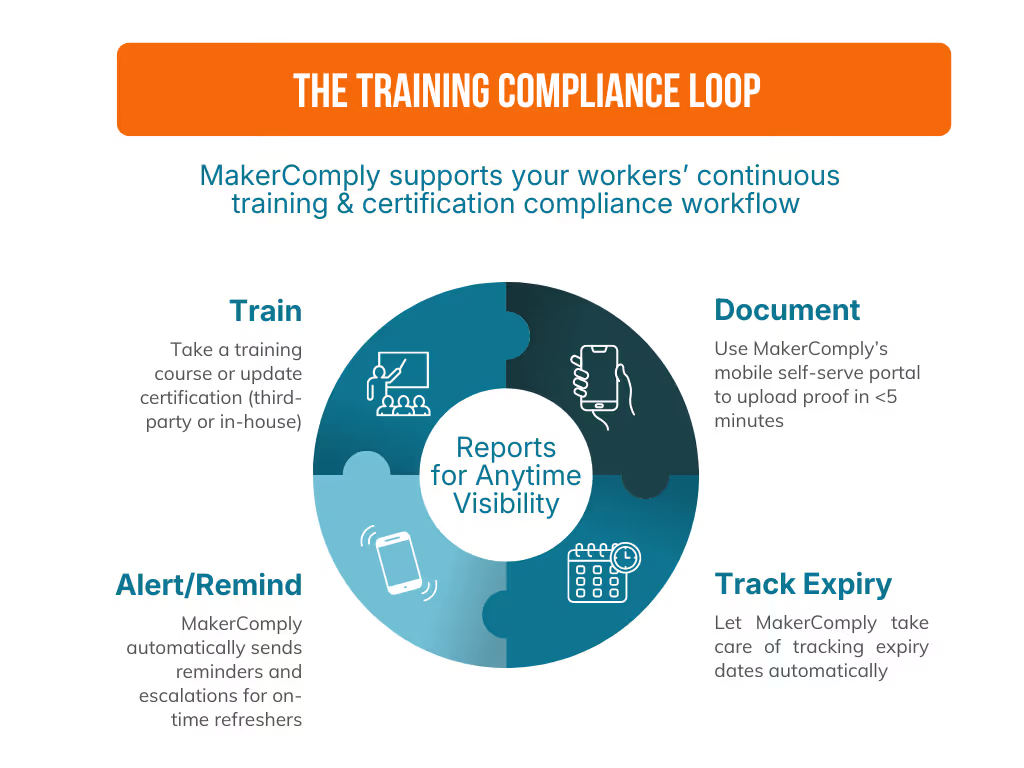
That’s why many facilities are now using training management software. These digital tools solve many of these problems by:
OSHA doesn’t mandate the use of any specific system to track training, but the agency does require that records be accurate, up-to-date, and accessible during inspections. That’s why digital tracking tools have become a go-to solution for manufacturers looking to stay compliant and organized.
A proper system takes the stress out of an OSHA inspection. When your training records are up to date and easy to access, it shows the inspector you’re serious about safety. More importantly, it helps you avoid OSHA violations and penalties, which can run into tens of thousands of dollars (per violation).
Safety managers know the tension well. Production lines need to move fast. Upper management wants numbers, not delays. Workers might skip training because “we’ve done it a hundred times.”
A solid training system maintains consistency, even under high pressure. It also helps with the labor shortage. When new or unskilled workers come in, clear training helps them get up to speed faster and do the job right.
When workers see that you’re investing in their safety and development, it builds trust. They feel respected. And that can make all the difference in getting them to stay.
References:
The Occupational Safety and Health Administration, or OSHA, is the federal agency responsible for workplace safety. Since 1970, it’s been responsible for making sure workers in the U.S. are trained,equipped, and protected from known hazards on the job.
Skipping that training might save time in the short run, but it can cost lives later. It can also cost your company thousands in fines.
“One serious OSHA violation can cost over $15,000 per day. If OSHA calls it "willful," that number jumps to $156,000.”1
At the same time, staying compliant isn’t easy. Since 1981, the federal government has added a new manufacturing regulation almost every week. Today, small and medium-sized factories are facing over 297,000 federal regulations.2
This guide will walk you through what OSHA expects when it comes to employee training—what the law says, when training must happen, and how to stay compliant without losing your mind (or your money). Let’s break it down.

OSHA requires employers to train workers so they understand the hazards of their job and know how to protect themselves.
Across all industries, OSHA’s baseline standards1 boil down to this:
In 2023, Skin Battery America was cited for failing to train workers on emergency response and toxic hazards like nickel and hydrofluoric acid after a lithium battery fire. OSHA issued $77,200 in fines for five serious violations.7
At Phenix Lumber, a fatal incident involving an untrained maintenance supervisor led to a deeper investigation. OSHA uncovered years of violations, including missed lockout–tagout training. The company faced $2.5 million in fines and eventually went bankrupt with $50 million in liabilities.8
Here are some of the most important ones from OSHA’s General Industry standards:
Most of these standards apply to general industry. They’re consistent across manufacturing sectors unless a company qualifies as a “special industry” (e.g., logging, textiles).
To check if your industry has additional or separate OSHA rules, talk to a compliance consultant. Industries like construction, agriculture, maritime, and specific manufacturing segments often have their own standards.
Not every OSHA training requirement applies to every facility. It all depends on what’s happening on your shop floor.
For example:
So, how do you know what applies to you?
Look at your equipment, your materials, and your work processes.Then, cross-check against OSHA’s General Industry standards (29CFR 1910)6 and prioritize based on exposure, severity, and likelihood of occurrence.
You also need to document everything. If OSHA shows up, you’ll need to explain why you didn’t train on certain topics just as clearly as why you did.
OSHA regulations on training are clear: you can't wait until after an incident to teach safety. According to OSHA 2254, workers must be trained before they’re exposed to any hazard. This applies to equipment use, chemicals, PPE, and procedures.
Retraining is required when:
OSHA does not mandate annual training across the board. Instead,refresher training is required when:
OSHA requires employers to document training. These records must include:
Records must be retained and made available to OSHA upon request.While OSHA doesn’t give a universal timeline, three to five years is common practice. In some cases, such as exposure to toxic substances, records must be kept for the employee's full tenure plus 30 years.
Many employers opt to retain training records for longer than required. In the event of an OSHA inspection, accident investigation,or legal claim, having thorough historical records can help prove compliance and protect the company from liability.
Many manufacturers still rely on pen and paper or spreadsheets to track employee training. But these methods come with serious drawbacks.
Paper records can go missing, get damaged, or end up misfiled. Remember that you’ll be filling all of that in by hand, so there will be chances for mistakes and extra time consumption. Even if you're aiming for a standard 7-year retention after someone leaves (common for legal protection), those paper files add up fast.
If you have 100 workers, times multiple training events per year, times seven years of record retention, that can add up to tens of thousands of training records.
Spreadsheets also don’t have any automatic tracking. They cannot alert managers when training is due. If a certification is about to expire or a refresher course is required, there will be no built-in reminder.
When OSHA asks for proof of compliance, disorganized records can become a real problem. Checking who’s overdue on training means flipping through binders or manually scanning spreadsheet rows.
That’s why many facilities are now using training management software. These digital tools solve many of these problems by:
OSHA doesn’t mandate the use of any specific system to track training, but the agency does require that records be accurate, up-to-date, and accessible during inspections. That’s why digital tracking tools have become a go-to solution for manufacturers looking to stay compliant and organized.
A proper system takes the stress out of an OSHA inspection. When your training records are up to date and easy to access, it shows the inspector you’re serious about safety. More importantly, it helps you avoid OSHA violations and penalties, which can run into tens of thousands of dollars (per violation).
Safety managers know the tension well. Production lines need to move fast. Upper management wants numbers, not delays. Workers might skip training because “we’ve done it a hundred times.”
A solid training system maintains consistency, even under high pressure. It also helps with the labor shortage. When new or unskilled workers come in, clear training helps them get up to speed faster and do the job right.
When workers see that you’re investing in their safety and development, it builds trust. They feel respected. And that can make all the difference in getting them to stay.
References: