Is ISO 9001 certification really worth it for a small machine shop or plastics company with 150 employees or fewer? A common misconception is that it’s costly, bureaucratic and only for large companies.
Small manufacturers often manage limited staff, a tight budget and complex quality rules. This makes effective quality management for small manufacturers a real challenge and raises the question: is ISO 9001 is really worth it or just another checkbox?
If you’re considering getting certification or want to improve your current quality processes, this article will show what ISO 9001 certification can do for small manufacturers. You will know what manufacturers are experiencing and what numbers and real case studies say.
When small manufacturers look for real numbers on ISO 9001’s return on investment (ROI), they often find mixed or confusing answers. Some sources claim big gains, while others say there’s little financial impact. The truth is, most content online is from consultants, not actual manufacturers. So content can be biased. But talking to other manufacturers gives the sense that, like oxygen, they may not know how to measure the ROI of ISO 9001, but they know it's there.
According to Hyer & Tang's (2024) research paper1, finding publicly available financial case studies is rare, but they do exist (especially through state manufacturing extension programs / MEPs). Most firms don’t evaluate before and after performance in numbers. Some manufacturers find no clear gains since they don't have a baseline, but some see improved efficiency and happy customers.
This shows ROI isn’t always just sales growth, but it also includes:

Some case study snapshots show how small manufacturers are achieving real results with ISO 9001 certification.
New Berlin Plastics2 is a 140-employee that manufactures custom injection-molded plastic components. Their upgrade to ISO 9001 gave them a powerful ROI. They increased sales by $3 million, saw cost savings of $60,000, and retained sales by $14 million. The “retained sales” figure is especially meaningful because it shows what would have been lost without the certification update.
Iris Plastics3 is a small family-owned business with only 12 employees. It manufactures custom blow-molded plastic components. They faced a challenging time managing documentation, policies, and procedures to comply with ISO 9001:2015 in preparation for an audit.
So, they took the help of the Tennessee Manufacturing Extension Partnership (TMEP) in developing a policy manual, writing work instructions, creating a risk register, and running preliminary audits. After implementation, Iris Plastic got the certificate and reported these results:
Custom Metal Design4 is a medium-sized company with 60 employees. It is a leading provider of container handling systems in Oakland, Florida, and offers laser cutting, conveyor systems, custom metal products, and prototyping services.
They aimed to get ISO 9001 certification to get larger defense and OEM contracts. They worked with the state manufacturing support program to review the ISO 9001:2015 procedures and conduct internal audits to identify gaps in their existing QMS.
They passed the ISO Audit within the required time and got these impressive results:
American Elite Molding LLC5 is a medium-sized business with 124 employees. It manufactures nylon cable ties and offers an extensive line of cable ties in a variety of lengths, tensile strengths, and colors, plus accessories such as mounting pads and cable clamps.
They serve different markets such as HVAC, electrical, and construction across the US, Canada, and Mexico. For ISO 9001, they teamed up with a state manufacturing support program to maintain quality and customer satisfaction. After achieving the certificate, they got the hard ROI:
Mullets Aluminum of Sarasota6 is a major provider of aluminum railings, gates, and related architectural components in Florida. They are known for quality and innovations, so they went for ISO 9001 certification to streamline their processes, improve efficiency, and enhance customer confidence. After getting ISO certification, they reported a hard ROI:
Superior Handling Equipment7 is a women-owned small private business with 14 employees. It manufactures speed lift systems used in supermarkets, hospitals, schools, and industrial settings.
Even though the company has earned a reputation, decision makers decided to upgrade their ISO 9001:2008 certification to ISO 9001:2015 to align their process with quality systems. After getting certification, they reported the following results:
Even when financials are unclear, ISO 9001 offers long-term advantages:
ISO 9001 certification makes you eligible for new contracts, especially in highly regulated industries such as defense, aerospace and automotive supply chain. Many prime contractors and federal agencies require manufacturers to be ISO 9001 certified. It shows your responsibility towards quality and increases your firm’s chance of winning big contracts. In other instances, manufacturers say they know they would lose existing contracts if they did not have ISO certification. And if you already have customers who expect you to maintain your ISO certification, you know there's a clear link between ISO compliance and customer retention.
A disciplined ISO 9001 quality management system facilitates consistent product quality, reduces defects and limits customer issues. Certified small manufacturers get fewer product returns due to standardized processes and regular audits.
ISO 9001 also helps in cutting waste and identifying inefficiency. It minimizes mistakes, rework and saves money and resources. Using a quality management software can benefit small manufacturers by tracking defects and highlighting root causes. It helps implement quality management for small manufacturers more effectively.
ISO 9001 reinforces clear, documented roles and responsibilities. It clears up confusion about who does what. When roles are defined and employees know the purpose of their work, they work more productively and make less errors.
Finally, certification makes your business more sellable. It adds credibility and shows a company run on a proper system, not on a single founder. ISO 9001-certified firms are known for lower risk and high operational efficiency, making them more appealing to investors. It allows owners to exit the business without disturbing operations.
Getting ISO 9001 certified doesn't guarantee profit. Here are some implementations you can execute to improve your odds of a positive ROI:
Get Customer-Driven: Are Your Customers Asking for ISO?
Align certification with customers’ demand. Research your target customers and determine if they require you to be ISO certified. If yes, certification will be an investment in revenue growth. According to the American Society for Quality (ASQ)8, certification can enhance a global customer base. There are case studies mentioned above where manufacturers adopted ISO 9001 certification due to customer demand and got positive outcome
Start With Gap Analysis: Where Are You Now?
A gap analysis helps you analyze your existing quality management system against ISO 9001 requirements. This tells you what requirements you didn’t address in your firm before and then you can make a plan to execute new processes. To do a gap analysis, most manufacturers conduct an internal audit, or a mock audit: they walk through each of the ISO 9001 standards and assess their current level of conformance with that standard, to see if they need to make changes in order to comply. Inexpensive audit management software can help with this, if it enables:
Leverage State MEPs: Often Underused and Grant-Funded
Every U.S. state has an MEP center that offers consultation, training and quality management to small manufacturers. Even though these centers provide low-cost or subsidized ISO 9001 support through grants, many businesses don’t use these valuable resource
Use Minimalist Templates: Don’t Over-Document
ISO 9001:2015 itself clearly says that documentation should only be kept “to the extent necessary.”9 It isn’t asking you to drown in paperwork. It’s about keeping things practical. Keep what truly matters, like your scope, policy, objectives, and important records. The simpler your system, the easier it is to manage, audit, and actually use without unnecessary stress.
Train Smart, Not Long: Focus on Practical Implementation
As a plant owner or manager juggling tight schedules and limited resources, deliver concise, job-specific training that targets the exact quality processes your team needs to master for ISO 9001 compliance. Use training management software to minimize the time you spend chasing after your workers to take their trainings on time and give you their certifications.
Use real examples from your shop floor and have your team try things out hands-on. This tactic helps your team quickly apply what they learn. It also makes certification efforts more effective and reduces interruptions to daily operations.
Invest Wisely in Software Tools that Help you Prep for Audits - Affordably
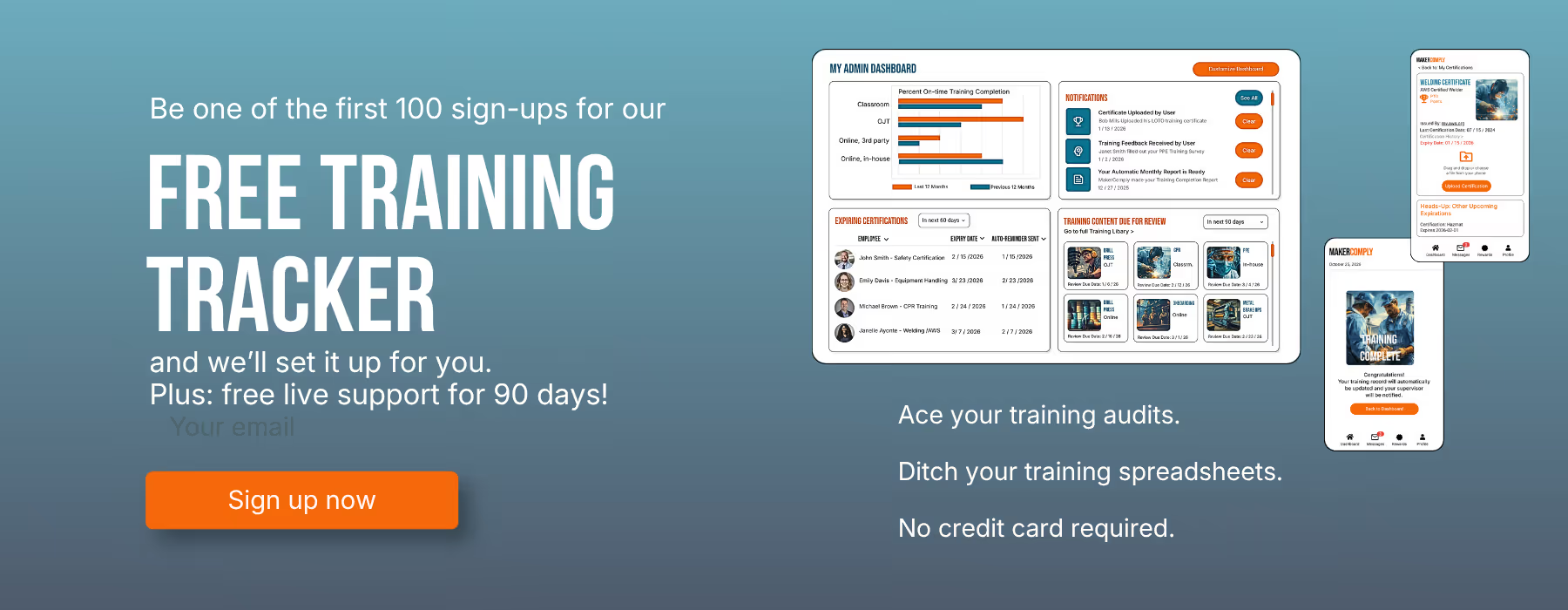
Many manufacturers have shifted away from managing their ISO certifications with spreadsheets, to using purpose-built audit management software that saves them time. That delivers faster ROI, but only if the software is cost-effective and easy to learn and use. Bloated enterprise audit management software that costs more than it helps will slow down your time to ROI for ISO 9001. Look for software like MakerComply, designed for small-to-medium manufacturers.
ISO 9001 certification can pay off, especially if your customers care about it. Even when not required, it can streamline processes, reduce defects, and support growth, especially when paired with quality management software. As the case studies snapshot earlier in this article demonstrated, ROI is there, but only if you approach it strategically and practically.
If you’re on the fence, start by connecting with fellow manufacturers who have firsthand experience with the certification journey instead of relying solely on consultants’ advice. Their advice will give you a real perception of how ISO 9001 can back your business goals and improve your quality management system from the ground up.
Sources:
Is ISO 9001 certification really worth it for a small machine shop or plastics company with 150 employees or fewer? A common misconception is that it’s costly, bureaucratic and only for large companies.
Small manufacturers often manage limited staff, a tight budget and complex quality rules. This makes effective quality management for small manufacturers a real challenge and raises the question: is ISO 9001 is really worth it or just another checkbox?
If you’re considering getting certification or want to improve your current quality processes, this article will show what ISO 9001 certification can do for small manufacturers. You will know what manufacturers are experiencing and what numbers and real case studies say.
When small manufacturers look for real numbers on ISO 9001’s return on investment (ROI), they often find mixed or confusing answers. Some sources claim big gains, while others say there’s little financial impact. The truth is, most content online is from consultants, not actual manufacturers. So content can be biased. But talking to other manufacturers gives the sense that, like oxygen, they may not know how to measure the ROI of ISO 9001, but they know it's there.
According to Hyer & Tang's (2024) research paper1, finding publicly available financial case studies is rare, but they do exist (especially through state manufacturing extension programs / MEPs). Most firms don’t evaluate before and after performance in numbers. Some manufacturers find no clear gains since they don't have a baseline, but some see improved efficiency and happy customers.
This shows ROI isn’t always just sales growth, but it also includes:
Some case study snapshots show how small manufacturers are achieving real results with ISO 9001 certification.
New Berlin Plastics2 is a 140-employee that manufactures custom injection-molded plastic components. Their upgrade to ISO 9001 gave them a powerful ROI. They increased sales by $3 million, saw cost savings of $60,000, and retained sales by $14 million. The “retained sales” figure is especially meaningful because it shows what would have been lost without the certification update.
Iris Plastics3 is a small family-owned business with only 12 employees. It manufactures custom blow-molded plastic components. They faced a challenging time managing documentation, policies, and procedures to comply with ISO 9001:2015 in preparation for an audit.
So, they took the help of the Tennessee Manufacturing Extension Partnership (TMEP) in developing a policy manual, writing work instructions, creating a risk register, and running preliminary audits. After implementation, Iris Plastic got the certificate and reported these results:
Custom Metal Design4 is a medium-sized company with 60 employees. It is a leading provider of container handling systems in Oakland, Florida, and offers laser cutting, conveyor systems, custom metal products, and prototyping services.
They aimed to get ISO 9001 certification to get larger defense and OEM contracts. They worked with the state manufacturing support program to review the ISO 9001:2015 procedures and conduct internal audits to identify gaps in their existing QMS.
They passed the ISO Audit within the required time and got these impressive results:
American Elite Molding LLC5 is a medium-sized business with 124 employees. It manufactures nylon cable ties and offers an extensive line of cable ties in a variety of lengths, tensile strengths, and colors, plus accessories such as mounting pads and cable clamps.
They serve different markets such as HVAC, electrical, and construction across the US, Canada, and Mexico. For ISO 9001, they teamed up with a state manufacturing support program to maintain quality and customer satisfaction. After achieving the certificate, they got the hard ROI:
Mullets Aluminum of Sarasota6 is a major provider of aluminum railings, gates, and related architectural components in Florida. They are known for quality and innovations, so they went for ISO 9001 certification to streamline their processes, improve efficiency, and enhance customer confidence. After getting ISO certification, they reported a hard ROI:
Superior Handling Equipment7 is a women-owned small private business with 14 employees. It manufactures speed lift systems used in supermarkets, hospitals, schools, and industrial settings.
Even though the company has earned a reputation, decision makers decided to upgrade their ISO 9001:2008 certification to ISO 9001:2015 to align their process with quality systems. After getting certification, they reported the following results:
Even when financials are unclear, ISO 9001 offers long-term advantages:
ISO 9001 certification makes you eligible for new contracts, especially in highly regulated industries such as defense, aerospace and automotive supply chain. Many prime contractors and federal agencies require manufacturers to be ISO 9001 certified. It shows your responsibility towards quality and increases your firm’s chance of winning big contracts. In other instances, manufacturers say they know they would lose existing contracts if they did not have ISO certification. And if you already have customers who expect you to maintain your ISO certification, you know there's a clear link between ISO compliance and customer retention.
A disciplined ISO 9001 quality management system facilitates consistent product quality, reduces defects and limits customer issues. Certified small manufacturers get fewer product returns due to standardized processes and regular audits.
ISO 9001 also helps in cutting waste and identifying inefficiency. It minimizes mistakes, rework and saves money and resources. Using a quality management software can benefit small manufacturers by tracking defects and highlighting root causes. It helps implement quality management for small manufacturers more effectively.
ISO 9001 reinforces clear, documented roles and responsibilities. It clears up confusion about who does what. When roles are defined and employees know the purpose of their work, they work more productively and make less errors.
Finally, certification makes your business more sellable. It adds credibility and shows a company run on a proper system, not on a single founder. ISO 9001-certified firms are known for lower risk and high operational efficiency, making them more appealing to investors. It allows owners to exit the business without disturbing operations.
Getting ISO 9001 certified doesn't guarantee profit. Here are some implementations you can execute to improve your odds of a positive ROI:
Get Customer-Driven: Are Your Customers Asking for ISO?
Align certification with customers’ demand. Research your target customers and determine if they require you to be ISO certified. If yes, certification will be an investment in revenue growth. According to the American Society for Quality (ASQ)8, certification can enhance a global customer base. There are case studies mentioned above where manufacturers adopted ISO 9001 certification due to customer demand and got positive outcome
Start With Gap Analysis: Where Are You Now?
A gap analysis helps you analyze your existing quality management system against ISO 9001 requirements. This tells you what requirements you didn’t address in your firm before and then you can make a plan to execute new processes. To do a gap analysis, most manufacturers conduct an internal audit, or a mock audit: they walk through each of the ISO 9001 standards and assess their current level of conformance with that standard, to see if they need to make changes in order to comply. Inexpensive audit management software can help with this, if it enables:
Leverage State MEPs: Often Underused and Grant-Funded
Every U.S. state has an MEP center that offers consultation, training and quality management to small manufacturers. Even though these centers provide low-cost or subsidized ISO 9001 support through grants, many businesses don’t use these valuable resource
Use Minimalist Templates: Don’t Over-Document
ISO 9001:2015 itself clearly says that documentation should only be kept “to the extent necessary.” It isn’t asking you to drown in paperwork. It’s about keeping things practical. Keep what truly matters, like your scope, policy, objectives, and important records. The simpler your system, the easier it is to manage, audit, and actually use without unnecessary stress.
Train Smart, Not Long: Focus on Practical Implementation
As a plant owner or manager juggling tight schedules and limited resources, deliver concise, job-specific training that targets the exact quality processes your team needs to master for ISO 9001 compliance. Use training management software to minimize the time you spend chasing after your workers to take their trainings on time and give you their certifications.
Use real examples from your shop floor and have your team try things out hands-on. This tactic helps your team quickly apply what they learn. It also makes certification efforts more effective and reduces interruptions to daily operations.
Invest Wisely in Software Tools that Help you Prep for Audits - Affordably
Many manufacturers have shifted away from managing their ISO certifications with spreadsheets, to using purpose-built audit management software that saves them time. That delivers faster ROI, but only if the software is cost-effective and easy to learn and use. Bloated enterprise audit management software that costs more than it helps will slow down your time to ROI for ISO 9001. Look for software like MakerComply, designed for small-to-medium manufacturers.
ISO 9001 certification can pay off, especially if your customers care about it. Even when not required, it can streamline processes, reduce defects, and support growth, especially when paired with quality management software. As the case studies snapshot earlier in this article demonstrated, ROI is there, but only if you approach it strategically and practically.
If you’re on the fence, start by connecting with fellow manufacturers who have firsthand experience with the certification journey instead of relying solely on consultants’ advice. Their advice will give you a real perception of how ISO 9001 can back your business goals and improve your quality management system from the ground up.
Sources: