Small manufacturers often face a tradeoff between staying lean and independent or adopting formal standards to reach bigger markets. ISO 9001 certification helps bridge that gap.
If you’ve ever wondered how to:
...then it might be time to take a closer look at ISO certification.

ISO 9001 certification is an international standard for quality management systems (QMS). For small and mid-sized U.S. manufacturers, it’s a way to show buyers that the shop/facility runs with consistency, traceability, and accountability. The current version in use is ISO 9001:2015, soon to be replaced with ISO 9001:2026.
In the U.S., approximately 300,000 companies1 are ISO 9001 certified. Many of them are small to medium-sized factories that need a better way to meet customer demands or prepare for growth.
Here are the key sections manufacturers should focus on:
The certification process begins by reviewing each ISO 9001 standard, verifying whether the business meets it, and providing real-world proof (such as training logs, inspection reports, maintenance records, or process documents).
Once documentation is in place, an accredited third-party auditor:
If everything checks out, the business gets certified. ISO certification lasts three years, with yearly surveillance audits to ensure continued compliance.
More than a million businesses around the world have earned ISO 9001 certification, and many of them are small manufacturers. Here are the benefits they enjoy:
Many small manufacturers want to improve quality but worry about adding complexity. ISO 9001 helps document what’s already working and identify areas for improvement. The framework will create simple checks to avoid common errors in your workflow.
With ISO 9001 protocols, manufacturers map out production steps and define checkpoints using Plan-Do-Check-Act (PDCA) to catch issues early.
When roles, expectations, and processes are unclear, employees often repeat mistakes or waste time. ISO 9001 provides a structure that helps people perform their jobs more effectively.
The work of preparing for an ISO 9001 certification audit promotes worker engagement if done right: By involving employees in process improvements, training, and feedback, you can install a stronger QMS culture within your company.
Surprises in production or customer complaints can hit hard. With ISO 9001, regular internal audits will be conducted to prevent small issues from becoming big problems.
For example, a small metal parts manufacturer might notice during an internal audit that one inspection step is being skipped during shift changes. By catching this early, they avoid a batch of defective parts reaching a key customer.
Smaller manufacturers often struggle to stand out in competitive markets. An ISO 9001 certification shows that a company meets international standards and follows reliable systems.
95% of major multinational companies require suppliers to hold at least one ISO certification2. Certification sends a clear signal that this business is serious about quality and consistency.
Many corporate buyers and government agencies require ISO 9001 as a basic condition to bid. Without it, small manufacturers get ruled out before the conversation even starts.
ISO-certified businesses are 50% more likely to secure international contracts3 because they’re already aligned with global expectations.
While the costs of certification are real, studies show that certified businesses often perform better financially4. It’s because internal improvements lead to better service, stronger customer loyalty, and more repeat business.
Thousands of small manufacturers across the U.S. have taken the leap toward ISO 9001 certification. These are not global corporations with unlimited budgets.
Some of them are even family-run shops and tightly managed teams with fewer than 20 people. And for each one, ISO 9001 helped unlock new sales and growth. Let’s see some examples:
This family-owned machining business needed ISO 9001:2015 to keep a major contract. After working with FloridaMakes to implement the system, they saw immediate results: $1 million in new and retained sales, and new orders from both current and new customers.
“This allowed us to receive several new orders from our existing customers along with several new customers.”
— Mike Soos
After 40 years of serving retail, healthcare, and industrial clients, this woman-owned business saw ISO certification as the next step to modernize.
In the process, they streamlined their systems, and helped them earn certification. It resulted in a 20% increase in sales, faster order cycles, and two new hires.
This veteran-owned fabricator wanted to enter new markets but lacked formal ISO certification. With help from New York’s MEP, the company trained staff, created a quality manual, and built a top-level procedure system. It paid off with retained business, 10–15% growth in new sales, and a more quality-focused culture.
Founded in 1948, this small family-run defense contractor needed ISO 9001:2015 to stay competitive with government clients. Budget constraints were a barrier, but NJMEP helped them join a consortium grant to afford certification training.
The outcome was $2.1 million in increased/retained sales, as well as new investments and job creation.
For small manufacturers, the road to ISO 9001 certification shouldn’t feel like a full-time job. But for some, it does, unfortunately.
The standard touches nearly every corner of the operation (documentation, production, inventory, training, supplier management, and more). There are multiple sections to work through. And all of it must withstand the scrutiny of an external auditor.
While the benefits are real, the process can quickly go off track if approached the wrong way. Many small teams fall into the same traps because they’re already stretched thin. Without the right tools or planning, even well-run factories can stumble.
Wondering how to pass an ISO 9001 audit without taking a fall? Here are a few common mistakes plant managers often make during the certification process:
Those tools might seem manageable at first, but they don’t scale.
Without a way to track who’s doing what, what’s missing, and how close the team is to being ready, managers are left guessing. And that’s when small issues become big problems.
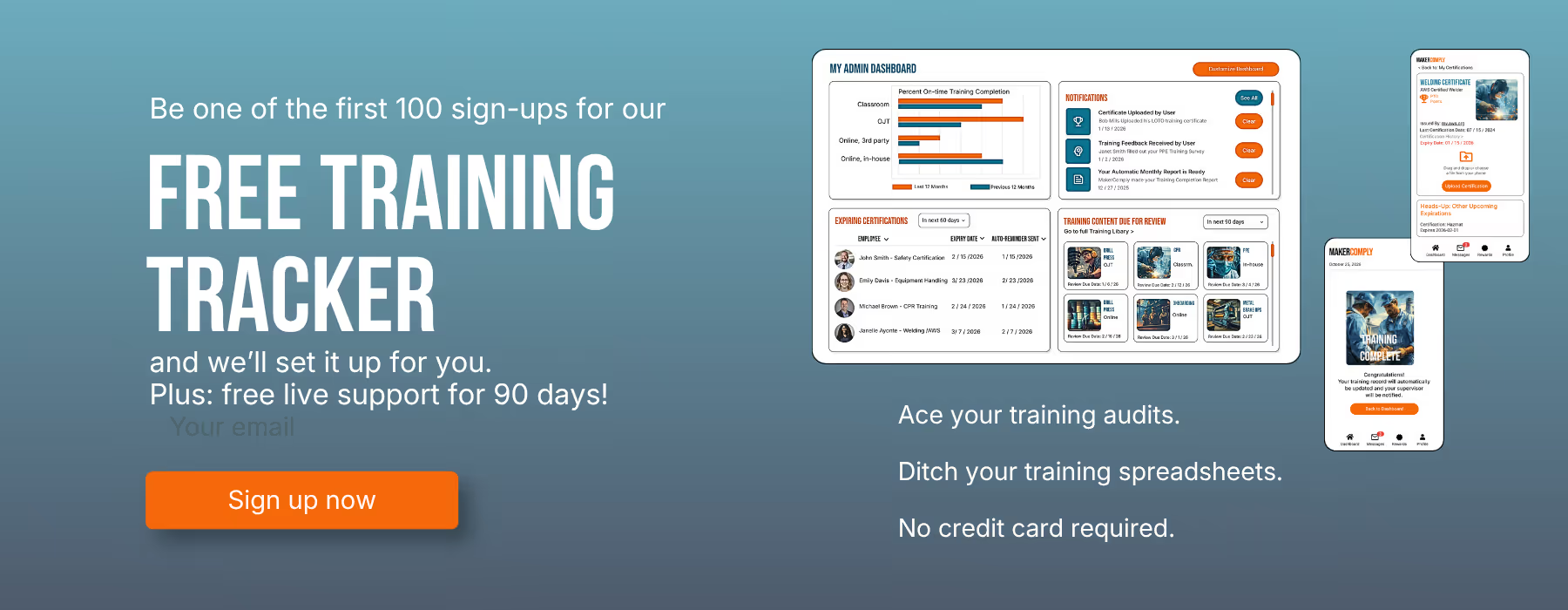
This is why more manufacturers are turning to audit management software like MakerComply. It brings structure to the process without taking control away from you. Documents, deadlines, responsibilities, training records—all of it lives in one place. Managers can align their teams and see the gaps early without micromanaging.
Here’s what to look for in a tool that actually works for small manufacturing teams:
What is ISO 9001 certification?
ISO 9001 is an international standard that outlines requirements for a quality management system. It helps manufacturers improve consistency, reduce errors, and meet customer expectations.
Is ISO 9001 certification worth it for small manufacturers?
Yes. It can improve quality, increase sales opportunities, and help win contracts, especially with government or large buyers.
How long does it take to get ISO 9001 certified?
Most small manufacturers complete the process in 3 to 6 months, depending on existing systems and resources.
What are the biggest mistakes to avoid?
Treating ISO as a one-time project, overcomplicating documentation, skipping internal audits, and managing everything with disconnected tools like spreadsheets. If you're a small-to-medium manufacturer, find an affordable tool like MakerComply rather than investing in the traditional five- and six-figure solutions that are meant for the big shops.
What does audit management software do?
It helps you plan, track, and manage your entire ISO 9001 audit. It centralizes documents, assigns tasks, flags issues, and keeps your team aligned. Instead of maintaining spreadsheets and a dispersed collection of emails and files, you'll have a single central repository to manage and control it all.
How often do we need to renew certification?
ISO 9001 certification is valid for three years, with surveillance audits typically required annually.
Sources:
Small manufacturers often face a tradeoff between staying lean and independent or adopting formal standards to reach bigger markets. ISO 9001 certification helps bridge that gap.
If you’ve ever wondered how to:
...then it might be time to take a closer look at ISO certification.
ISO 9001 certification is an international standard for quality management systems (QMS). For small and mid-sized U.S. manufacturers, it’s a way to show buyers that the shop/facility runs with consistency, traceability, and accountability. The current version in use is ISO 9001:2015, soon to be replaced with ISO 9001:2026.
In the U.S., approximately 300,000 companies1 are ISO 9001 certified. Many of them are small to medium-sized factories that need a better way to meet customer demands or prepare for growth.
Here are the key sections manufacturers should focus on:
The certification process begins by reviewing each ISO 9001 standard, verifying whether the business meets it, and providing real-world proof (such as training logs, inspection reports, maintenance records, or process documents).
Once documentation is in place, an accredited third-party auditor:
If everything checks out, the business gets certified. ISO certification lasts three years, with yearly surveillance audits to ensure continued compliance.
More than a million businesses around the world have earned ISO 9001 certification, and many of them are small manufacturers. Here are the benefits they enjoy:
Many small manufacturers want to improve quality but worry about adding complexity. ISO 9001 helps document what’s already working and identify areas for improvement. The framework will create simple checks to avoid common errors in your workflow.
With ISO 9001 protocols, manufacturers map out production steps and define checkpoints using Plan-Do-Check-Act (PDCA) to catch issues early.
When roles, expectations, and processes are unclear, employees often repeat mistakes or waste time. ISO 9001 provides a structure that helps people perform their jobs more effectively.
The work of preparing for an ISO 9001 certification audit promotes worker engagement if done right: By involving employees in process improvements, training, and feedback, you can install a stronger QMS culture within your company.
Surprises in production or customer complaints can hit hard. With ISO 9001, regular internal audits will be conducted to prevent small issues from becoming big problems.
For example, a small metal parts manufacturer might notice during an internal audit that one inspection step is being skipped during shift changes. By catching this early, they avoid a batch of defective parts reaching a key customer.
Smaller manufacturers often struggle to stand out in competitive markets. An ISO 9001 certification shows that a company meets international standards and follows reliable systems.
95% of major multinational companies require suppliers to hold at least one ISO certification2. Certification sends a clear signal that this business is serious about quality and consistency.
Many corporate buyers and government agencies require ISO 9001 as a basic condition to bid. Without it, small manufacturers get ruled out before the conversation even starts.
ISO-certified businesses are 50% more likely to secure international contracts3 because they’re already aligned with global expectations.
While the costs of certification are real, studies show that certified businesses often perform better financially4. It’s because internal improvements lead to better service, stronger customer loyalty, and more repeat business.
Thousands of small manufacturers across the U.S. have taken the leap toward ISO 9001 certification. These are not global corporations with unlimited budgets.
Some of them are even family-run shops and tightly managed teams with fewer than 20 people. And for each one, ISO 9001 helped unlock new sales and growth. Let’s see some examples:
This family-owned machining business needed ISO 9001:2015 to keep a major contract. After working with FloridaMakes to implement the system, they saw immediate results: $1 million in new and retained sales, and new orders from both current and new customers.
“This allowed us to receive several new orders from our existing customers along with several new customers.”
— Mike Soos
After 40 years of serving retail, healthcare, and industrial clients, this woman-owned business saw ISO certification as the next step to modernize.
In the process, they streamlined their systems, and helped them earn certification. It resulted in a 20% increase in sales, faster order cycles, and two new hires.
This veteran-owned fabricator wanted to enter new markets but lacked formal ISO certification. With help from New York’s MEP, the company trained staff, created a quality manual, and built a top-level procedure system. It paid off with retained business, 10–15% growth in new sales, and a more quality-focused culture.
Founded in 1948, this small family-run defense contractor needed ISO 9001:2015 to stay competitive with government clients. Budget constraints were a barrier, but NJMEP helped them join a consortium grant to afford certification training.
The outcome was $2.1 million in increased/retained sales, as well as new investments and job creation.
For small manufacturers, the road to ISO 9001 certification shouldn’t feel like a full-time job. But for some, it does, unfortunately.
The standard touches nearly every corner of the operation (documentation, production, inventory, training, supplier management, and more). There are multiple sections to work through. And all of it must withstand the scrutiny of an external auditor.
While the benefits are real, the process can quickly go off track if approached the wrong way. Many small teams fall into the same traps because they’re already stretched thin. Without the right tools or planning, even well-run factories can stumble.
Wondering how to pass an ISO 9001 audit without taking a fall? Here are a few common mistakes plant managers often make during the certification process:
Those tools might seem manageable at first, but they don’t scale.
Shared drives get messy fast.
Binders of documentation are outdated the moment something changes.
Spreadsheets don’t show accountability or generate clear reports.
Without a way to track who’s doing what, what’s missing, and how close the team is to being ready, managers are left guessing. And that’s when small issues become big problems.
This is why more manufacturers are turning to audit management software like MakerComply. It brings structure to the process without taking control away from you. Documents, deadlines, responsibilities, training records—all of it lives in one place. Managers can align their teams and see the gaps early without micromanaging.
Here’s what to look for in a tool that actually works for small manufacturing teams:
What is ISO 9001 certification?
ISO 9001 is an international standard that outlines requirements for a quality management system. It helps manufacturers improve consistency, reduce errors, and meet customer expectations.
Is ISO 9001 certification worth it for small manufacturers?
Yes. It can improve quality, increase sales opportunities, and help win contracts, especially with government or large buyers.
How long does it take to get ISO 9001 certified?
Most small manufacturers complete the process in 3 to 6 months, depending on existing systems and resources.
What are the biggest mistakes to avoid?
Treating ISO as a one-time project, overcomplicating documentation, skipping internal audits, and managing everything with disconnected tools like spreadsheets. If you're a small-to-medium manufacturer, find an affordable tool like MakerComply rather than investing in the traditional five- and six-figure solutions that are meant for the big shops.
What does audit management software do?
It helps you plan, track, and manage your entire ISO 9001 audit. It centralizes documents, assigns tasks, flags issues, and keeps your team aligned. Instead of maintaining spreadsheets and a dispersed collection of emails and files, you'll have a single central repository to manage and control it all.
How often do we need to renew certification?
ISO 9001 certification is valid for three years, with surveillance audits typically required annually.
Sources: